

Dental implants replace missing teeth with an artificial root placed in the jawbone and a restoration attached on top. The main benefits are restored chewing function, a stable replacement tooth that does not depend on neighbouring teeth for support, a natural-looking result, and reduced bone shrinkage at the missing-tooth site. How much benefit you gain depends on your suitability for dental implant treatment, how you heal, and how the implant is maintained over time.
What Are the Main Benefits of Dental Implants?
The clearest benefits are functional. An implant-supported restoration is anchored in the jawbone rather than resting on gum tissue, so it can restore chewing function and hold its position under bite forces. Because the implant takes the structural role of a tooth root, it also transfers load into the surrounding bone, which may help limit the ridge shrinkage that follows tooth loss.
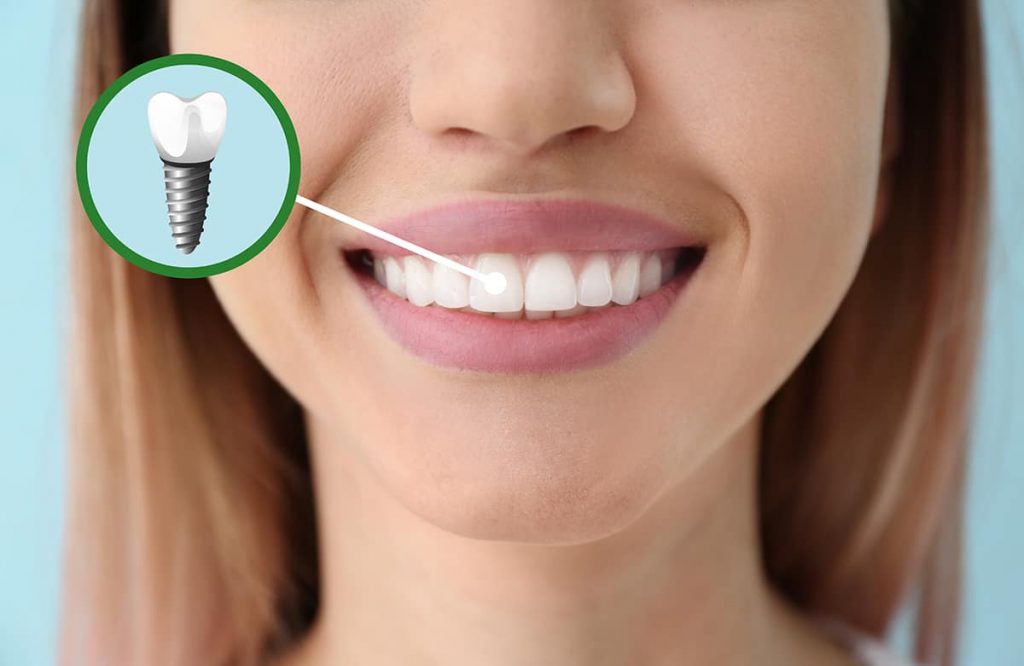
A single implant stands on its own, so the healthy teeth beside the gap do not need to be reduced to support a bridge. For patients with a loose denture, implants can provide the retention that reduces movement during eating and speech.
The remaining benefits relate to appearance and daily life. The visible restoration is designed around the shape, shade, position, and gum contour of the teeth surrounding it, so the result can look natural. Implant treatment also scales with the problem, since it can replace a single tooth or extend to several teeth in a row and full-arch cases.
Patients commonly report that stable replacement teeth make eating and conversation easier over the long term. How much of this applies to you depends on your bone condition and gum health, which the sections below work through in turn.
How Do Dental Implants Replace Missing Teeth?
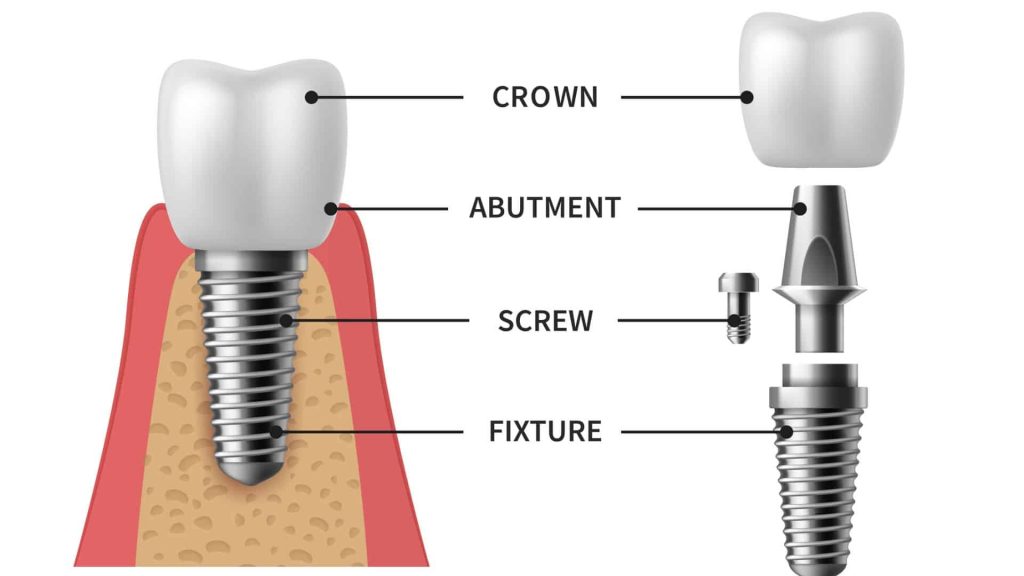
A dental implant is not a single object. It is an assembly of parts that together take the place of a natural tooth root and crown. According to the U.S. Food and Drug Administration, dental implant systems generally consist of an implant body, an abutment, and an artificial tooth or prosthesis.
The Implant Post
The implant body is surgically positioned in the jawbone, where it takes the structural role of a natural tooth root. Bone gradually forms a direct connection with the implant surface. This process is called osseointegration, and it is what allows the implant to carry biting forces.
The Abutment
The abutment is the connector between the implant body and the visible restoration. It sits at the gum line and is often placed after the implant has integrated with the bone.
The Final Restoration
The restoration is the part you see and use. An implant can support:
- A single crown
- An implant-supported bridge
- An implant-supported denture
- A full-arch restoration
If you want the technical detail on implant design and placement in bone, our article on endosteal implants covers it.
8 Key Benefits of Dental Implants
Each benefit below is explained with the conditions attached to it, since none of them applies equally to every patient.
1. Dental Implants Restore Chewing Function
Missing teeth change the way you eat. A gap reduces the surface available for mastication, and an unstable removable prosthesis can shift under load. Many people respond by chewing on one side, cutting food smaller than they used to, or avoiding certain textures.
An implant-supported restoration is anchored in bone rather than resting on gum tissue, so it can carry bite force in a more predictable way. That often means a wider range of foods becomes manageable, and chewing is more balanced across both sides of the mouth.
Chewing performance still varies. The number of implants and the condition of the opposing teeth all affect the result, and not every patient regains the full chewing capacity of a healthy natural tooth.
2. They Provide Stable Tooth Replacement
Stability is the benefit patients notice first, and it comes from osseointegration. Once bone has formed around the implant body, the implant is supported directly by the jaw instead of by the surrounding soft tissue.
It helps to separate three things that are often described as one:
- Implant stability is the connection between the implant body and bone.
- Crown or bridge stability depends on how the restoration is attached to the abutment and how the bite is balanced.
- Denture stability improves when a removable prosthesis is retained by implants rather than by suction or adhesive.
A well-integrated implant does not move the way a loose denture does. It is still a restoration with mechanical parts, and it is not correct to describe it as permanent or immune to future problems.
3. They Can Create a Natural-Looking Smile
The visible restoration is designed around the teeth beside it. A dental laboratory and your dentist can work on:
- Tooth shape and proportion
- Shade match with adjacent teeth
- Position relative to the smile line
- Gum contours around the restoration
- Bite relationship with the opposing arch
The aesthetic result is not guaranteed by the implant itself. Bone volume, gum thickness, implant position, and restorative design all influence how natural the final tooth looks, particularly in the front of the mouth where the gum margin is visible.
Which of these benefits actually apply to you?
After an implant consultation at Empress Walk Dental in North York, you leave knowing which of the benefits are realistic in your case and what each option involves.
4. They Help Preserve Jawbone After Tooth Loss
This is one of the strongest arguments for implant treatment, and it is the one most often left out of patient conversations.
A natural tooth root transfers chewing forces into the surrounding alveolar bone. That mechanical stimulation is part of what maintains bone volume. When a tooth is lost, the bone in that area no longer receives normal loading and can gradually resorb. The ridge narrows and reduces in height, which affects the fit of a denture and can complicate later treatment.
An implant placed in that site transfers functional load back into the surrounding bone, which may help reduce resorption around the missing-tooth area. The FDA identifies reduced jawbone shrinkage as a potential benefit of implant treatment.
This is a reduction in local bone loss, not a guarantee. Bone change can still occur around an implant, especially where there is peri-implant inflammation or an unfavourable bite.
5. They Do Not Depend on Neighbouring Teeth for Support
A conventional bridge is supported by the teeth on either side of the gap, and those teeth must be reduced to hold the bridge. If they are healthy and unrestored, that means removing sound tooth structure to solve a problem elsewhere.
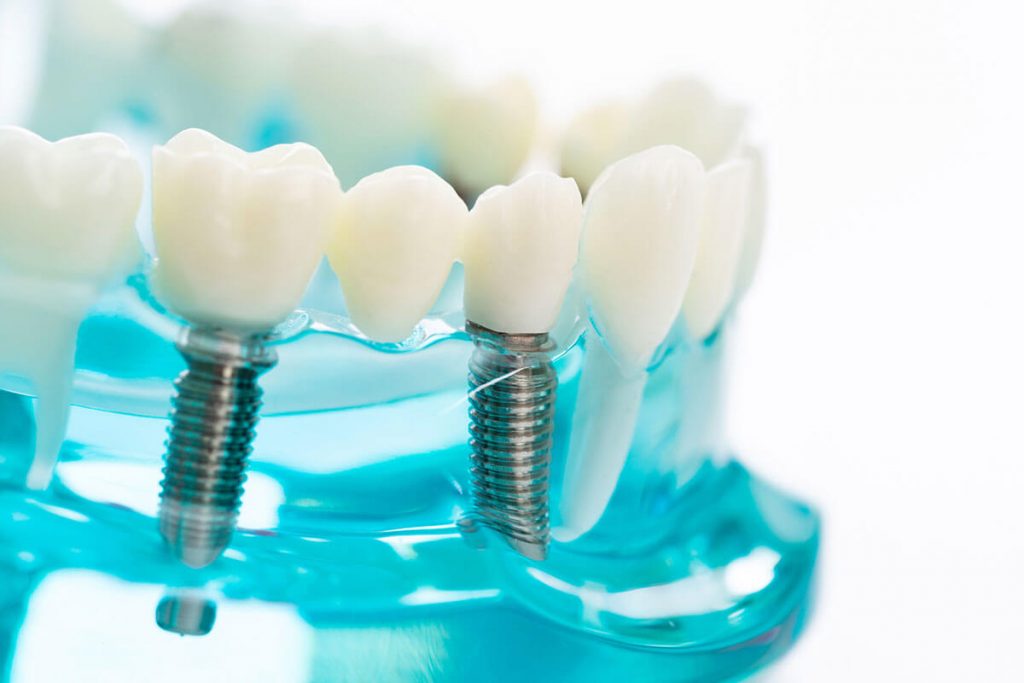
A single implant avoids this. It stands on its own in the jawbone and leaves the adjacent teeth untouched.
This benefit matters most when:
- The neighbouring teeth are healthy and lightly restored
- Bone and gum conditions support implant placement
- A single-tooth implant is clinically appropriate for the site
Where the adjacent teeth already need crowns, the calculation changes. Our comparison of implants and bridges works through the differences in full.
6. They Can Improve Speech and Denture Confidence
Teeth shape airflow and give the tongue a reference surface. Missing front teeth can affect certain sounds, and a denture that lifts or slides during speech creates a different problem again.
Replacing the missing teeth or stabilizing a denture with implants may improve pronunciation and reduce the movement that interrupts speech. Patients who have worn a loose lower denture often report the largest change here.
Speech outcomes are conditional. The position and shape of the replacement teeth, the design of the prosthesis, tongue movement, and the length of the adaptation period all play a part. If a speech difficulty existed before tooth loss, implant treatment is unlikely to resolve it.
7. They Can Replace Different Patterns of Tooth Loss
Implant treatment scales with the problem. The same basic principle applies across:
- One missing tooth restored with a single crown
- Several missing teeth in a row, restored with an implant-supported bridge
- Multiple missing teeth in separate areas of the mouth
- Most or all teeth in one arch restored with a full-arch prosthesis
- An existing removable denture stabilized by implants
8. They May Improve Comfort, Confidence, and Quality of Life
The functional benefits carry into daily life. Patients describe eating in restaurants without planning around the menu, speaking without monitoring a denture, and smiling without covering the mouth.
These are patient-reported outcomes, and they are worth acknowledging honestly. Restoring stable teeth can make social eating and conversation easier. It does not follow that implant treatment produces career advancement or resolves broader concerns about appearance, and no clinic should present it that way.
Can Dental Implants Improve Oral Health?
Partly. Implants can restore function and preserve healthy tooth structure that a bridge would otherwise consume. They do not make a mouth resistant to disease, and the idea that an implant is a maintenance-free tooth is one of the more damaging misconceptions in this area.

Dental Implants Cannot Develop Tooth Decay
The implant body, abutment, and crown are manufactured materials. Bacteria cannot demineralize them the way they demineralize enamel and dentin, so an implant cannot develop caries.
Your remaining natural teeth still can. Decay and gum disease continue to affect them regardless of how many implants are present.
The Surrounding Gums and Bone Still Require Care
The tissues around an implant behave much like the tissues around a natural tooth. Plaque accumulates at the gum margin. If it is not removed, the gum can become inflamed, a condition known as peri-implant mucositis. Left untreated, inflammation can extend to the supporting bone as peri-implantitis, which causes bone loss around the implant and can lead to implant failure.
The FDA advises regular cleaning around implants and the neighbouring teeth, and notes that local infection and untreated periodontal disease can contribute to complications. Implants need daily cleaning and professional monitoring at recall appointments.
Implant Components Can Still Wear or Loosen
An implant restoration is an assembly with screws and connections under repeated load. Over years of function, crowns can chip or wear, screws can loosen, and denture attachments can lose retention and need replacing. These are usually manageable repairs, but they are part of the long-term picture and belong in the cost calculation.
Who May Benefit Most From Dental Implants?
Suitability is determined by clinical examination and imaging. The scenarios below indicate where implant treatment is commonly discussed.
Someone With One Missing Tooth
A single implant restores the gap without reducing the healthy teeth on either side. This is often the clearest case for implant treatment.
Someone Missing Several Teeth
An implant-supported bridge can restore several adjacent teeth using fewer implants than teeth being replaced, and it avoids the removable partial denture that many patients find difficult to wear.
Someone Struggling With a Loose Denture
Implant-retained and implant-supported dentures address movement directly. A lower denture, which has the least natural retention, is a common candidate for this treatment.
Someone Seeking Fixed Tooth Replacement
Patients who do not want to remove a prosthesis for cleaning may prefer a fixed implant-supported restoration, subject to bone volume and hygiene access.
Someone With Adequate Bone and Healthy Gums
Bone height, bone width, and periodontal health directly affect whether an implant can be placed and how it performs. Where bone volume is insufficient, grafting or a sinus procedure may be discussed as a preparatory step.
Are Dental Implants Worth Considering?
For many patients with missing teeth, yes. Implants are not automatically the right answer for everyone, and a benefits article that claims otherwise is not being useful.
The decision usually turns on:
- The number and location of the missing teeth
- Bone volume and gum health at the site
- Medical history and any conditions affecting healing
- Smoking, which is associated with a higher rate of implant complications
- Treatment timeline, since healing and integration take months
- Upfront cost compared with alternatives
- Your ability to maintain the implant daily
- The condition of the neighbouring teeth
- Your preference for a fixed or a removable restoration
What Are the Trade-Offs to Weigh?
Implant placement is a surgical procedure. Local anesthesia controls pain during treatment, but postoperative soreness, swelling, or bruising is common and varies with the number of implants placed and any additional procedures performed. The FDA notes that implant placement is surgical and may involve both short-term and long-term complications.
Treatment also takes time. Assessment, placement, healing, osseointegration, and the final restoration typically span several months. Bone grafting extends that further. Implants can fail, most often where integration does not occur, where peri-implant disease develops, or where a mechanical component is overloaded.
None of these rules out implant treatment. It means the benefits should be weighed against your own risks and the alternatives available to you, which is a conversation to have during an examination with imaging. Our guide on what to know before getting a dental implant sets out the questions worth asking at that appointment.
FAQ
What is the biggest benefit of a dental implant?
The combination that matters most clinically is stable tooth replacement anchored in bone, restored chewing function, and reduced bone loss at the missing-tooth site. Together, these address both how the mouth works now and how the jaw changes over time.
Do dental implants help prevent jawbone loss?
An implant transfers chewing forces into the surrounding bone, which may help reduce resorption at that site after tooth loss. It reduces local bone loss rather than preventing all future bone change, and bone loss can still occur around an implant if peri-implant disease develops.
Do dental implants damage neighbouring teeth?
A single implant generally does not require the adjacent teeth to be reshaped, unlike a conventional bridge. Treatment planning still has to protect the neighbouring roots and nerves during placement, which is why imaging is used to assess the site before surgery.
Can dental implants improve chewing?
Yes, a stable implant-supported restoration can improve the ability to bite and chew compared with an open gap or a loose removable prosthesis.
Can dental implants improve speech?
Replacing missing teeth or stabilizing a denture with implants may improve pronunciation when tooth loss or prosthesis movement is the cause of the difficulty. An adaptation period is normal, and pre-existing speech conditions are unlikely to change.
Do dental implants feel like natural teeth?
In daily function, a well-integrated implant usually feels stable and natural. It is not biologically identical to a natural tooth. An implant has no periodontal ligament, so it does not have the same sensory feedback about bite pressure, and this is one reason bite balance is checked carefully at review appointments.
Can dental implants get cavities?
No. The implant body, abutment, and crown are artificial materials that cannot decay. The gum and bone around the implant can still become inflamed or infected, and your remaining natural teeth remain susceptible to decay and gum disease.
Are dental implants better than dentures?
Implants generally offer greater stability and do not rest on the gum tissue. Dentures remain a reasonable option for patients who prefer to avoid surgery, who have insufficient bone volume, or for whom cost is the deciding factor. An implant-retained denture sits between the two options.
Are dental implants better than bridges?
It depends on the health of the neighbouring teeth, bone condition at the site, treatment time, willingness to undergo surgery, and cost. A bridge is faster and avoids surgery, but requires reduction of the adjacent teeth. Our implants versus bridges comparison works through both options in detail.
Can everyone get dental implants?
No. Candidacy depends on bone volume, gum health, medical history, completed jaw growth, smoking status, and the ability to maintain the implant. Some of these are absolute limitations, and others can be addressed with preparatory treatment such as grafting or periodontal therapy.
Are dental implants permanent?
Implants are intended for long-term use and many function for decades. Neither the implant nor its restoration carries a guarantee of lasting for life. Crowns, screws, and attachments may need repair or replacement, and implants can fail where integration is lost or peri-implant disease develops.