


Dental treatments can be extremely costly. This can be particularly concerning for seniors, who may require more dental care as they age.
As a dentist accepting CDCP in North York, in this blog post, we will discuss CDCP for seniors and explain how to qualify for this government program. We also cover different treatments that this plan covers and how to apply for coverage.
What Is the Canadian Dental Care Plan?
The Canadian Dental Care Plan (CDCP) is a federal program that helps eligible Canadian residents access more affordable dental care if they meet the plan’s income and insurance requirements.
Health Canada administers the program, and Sun Life is responsible for processing dental claims. As of 2026, the CDCP is available to eligible Canadians of all ages, including seniors. Adjusted family net income is a key factor in determining the coverage level available under each CDCP plan.
CDCP Eligibility for Seniors (65+)
This section explains how seniors aged 65 and over can qualify for the CDCP.

1. Canadian Resident for Tax Purposes
This requirement means that you and your spouse or common-law partner, if applicable, must have filed Canadian tax returns for the previous year.
2. Adjusted Family Net Income Under $90,000
You are eligible only if your adjusted family net income (ANFI) is below $90,000. Also, your ANFI determines the coverage percentage of the CDCP-established fees. In particular:
- If your ANFI is less than $70,000, the CDCP covers 100% of eligible services based on CDCP-established fees.
- If your ANFI is between $70,000 and $79,999, the CDCP covers 60% of CDCP-established fees, and you pay a 40% co-payment.
- If your ANFI is $80,000 to $89,999, the CDCP covers 40%, and you have to pay 60% of costs out of pocket.
Health Canada assesses your family income based on tax information in your Notice of Assessment.
3. No Coverage From Private or Employer-Based Dental Insurance
If you have access to private dental insurance or coverage through an employer, pension plan, family member’s plan, professional or student organization, you are not eligible for the CDCP.
This applies even if you do not use the coverage, have to pay a premium for it, or choose not to enroll at all.
Exceptions: Retired individuals who opted out of pension dental coverage before December 11, 2023, who cannot opt back in, qualify for CDCP coverage.
Also, having dental coverage through a provincial or federal government social program does not automatically make you ineligible.
4. Age and Eligibility Phases
As explained earlier, the CDCP is now open to eligible Canadian residents of all ages. This means seniors no longer need to qualify through a separate rollout phase based on age.
Applications for the 2026-2027 benefit year are currently open.
Co-Payment by Income: What You’ll Actually Pay
As discussed, your ANFI determines your co-payment rate under the CDCP. This table shows your expected co-payment based on your ANFI:
| Adjusted Family Net Income | CDCP Covers | Your Co-Payment |
| Under $70,000 | 100% of the CDCP-established fee | 0% |
| $70,000–$79,999 | 60% of the CDCP-established fee | 40% |
| $80,000–$89,999 | 40% of the CDCP-established fee | 60% |
| $90,000 or more | Not eligible | Not applicable |
The CDCP does not necessarily cover the full amount your dental provider charges. Each service has an established fee, and you usually pay extra out of pocket, even if the CDCP covers 100% of the CDCP-established fee based on your adjusted family net income. You may also have additional costs for services that the CDCP does not cover.
What CDCP Covers for Seniors
The CDCP for seniors covers various dental services, from routine examinations to fillings. That said, some services have frequency limits. Other services may require pre-authorization before treatment begins.
Read this section to learn what services are covered by the CDCP for eligible seniors.
Diagnostic and Preventive Services
The CDCP covers services used to examine the mouth and prevent or detect dental problems, subject to frequency limits. Common services include:
- Dental examinations
- X-rays
- Scaling (cleaning)
- Fluoride treatment
- Dental sealants
For example, seniors can receive up to 3 examinations in 12 months. Scaling is covered for up to 4 units in any 12 months, in combination with root planing. If you need additional units of scaling and root planing, you’ll need pre-authorization.
Basic Restorative Services
The following services help repair teeth affected by decay or damage:
- Permanent and temporary fillings
- Pain control for teeth affected by disease
- Other eligible treatments for cavities
Basic restorative treatments also have frequency limits. In general, you can receive these treatments once per tooth every 24 months.
Endodontic Services
The CDCP covers the following endodontic treatments for eligible seniors:
- Root canal treatment
- Pulpectomies and pulpotomies
- Procedures to reduce infection and relieve dental pain
- Root canal re-treatments
Standard root canal treatment on incisors, canines, bicuspids, and first and second molars does not require pre-authorization.
However, root canal re-treatment, apicoectomy, retrofilling, and standard root canal treatment on third molars need pre-authorization and must meet the CDCP’s clinical eligibility criteria.
Periodontal Services
The CDCP covers certain treatments for gum and supporting structure problems, including:
- Scaling and root planing
- Treatment of certain oral infections and abscesses
- Non-surgical management of gum disease
- Bonding for mobile teeth, where eligible
Periodontal coverage also has frequency limits. For seniors, the standard limit for scaling and root planing is 4 units every 12 months. Additional units usually require pre-authorization.
Major Restorative Services
In addition to basic restorative services, which we covered earlier, the CDCP for seniors also covers some major restorative procedures, including:
- Posts and post removal
- Repairs and re-bonding of crowns and posts
- Eligible dental crowns
- Cores and posts used to support crowns
Crowns need pre-authorization and are subject to a frequency limit. Eligible clients can receive up to 4 crowns in 120 months and one crown per eligible tooth every 96 months.
Key note: Implant-supported crowns and other implant-related procedures are not covered.
Prosthodontic Services: Dentures
The CDCP covers eligible complete and partial removable dentures, along with certain repairs and relines.
Standard complete dentures typically do not require pre-authorization, but they still have a frequency limit: one per arch in any 96 months. The limit for immediate and transitional complete dentures is one per arch over a lifetime. Keep in mind that complete overdentures and complete dentures with long-term soft liners require pre-authorization.
Removable dentures need pre-authorization for initial placement. In general, partial acrylic dentures are limited to one per arch every 60 months, while partial cast dentures are limited to one per arch every 96 months.
Similar to crowns, both complete and partial implant-supported dentures and implant-related procedures are excluded from CDCP coverage.
Use Your Coverage at Empress Walk Dental
If you are eligible for the CDCP, you can use your coverage when you schedule a visit with us to reduce your out-of-pocket costs for eligible dental care.
Oral Surgery
The CDCP for seniors covers many oral surgeries. Some of them require pre-authorization, depending on the procedure and circumstances. Common examples are:
- Removal of teeth and roots
- Surgical treatment of certain cysts and tumors
- Surgical incisions and drainage
- Treatment related to jaw fractures
Anesthesia and Sedation
If you have dental anxiety, the CDCP plan may cover certain sedation dentistry services:
- Nitrous oxide
- Oral sedation
- Nitrous oxide combined with oral sedation
- Conscious sedation
- Deep sedation or general anesthesia
Of these, conscious sedation, deep sedation, and general anesthesia require pre-authorization.
Orthodontic Services
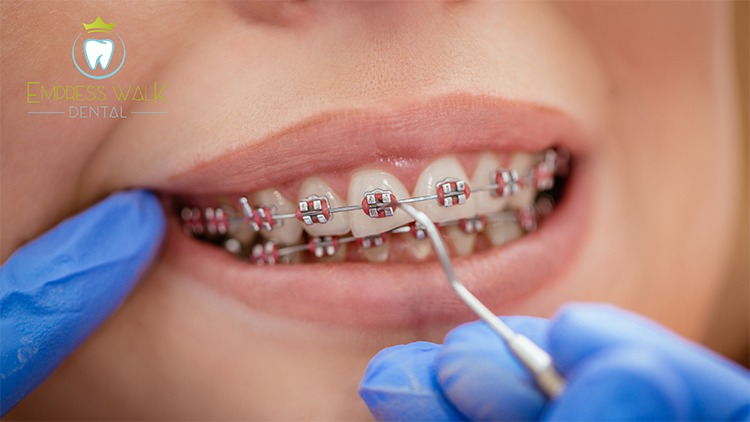
Currently, the CDCP does NOT cover orthodontic services. This means you should pay out of pocket for routine orthodontics, such as traditional braces and Invisalign.
Pre-Authorization and Frequency Limits
So far, you have learned about frequency limits and clinical criteria, as well as pre-authorization, which is mandatory for some treatments.
Health Canada uses pre-authorization to determine whether a proposed treatment meets its coverage criteria and the amount the CDCP will cover. Factors like oral health status and previous treatments affect the assessment.
In some cases, pre-authorization may also allow additional services beyond the usual frequency limits.
What CDCP Does NOT Cover
This section explores dental treatments not covered by the Canadian Dental Care Program.
Dental Implants
The CDCP excludes not only dental implants but also any other treatment involving implants. For example, while the program covers dentures, as discussed earlier, it does not cover implant-based dentures.
Read more: “What You Need to Know About Dental Implants”
Bridges
Bridges and all bridge-related procedures are excluded from the CDCP. This is an absolute exclusion, meaning these services cannot be approved through pre-authorization. If you need dental bridges, you must pay out of pocket.
Adult Orthodontics and Invisalign
Although this coverage has not yet launched, Health Canada has indicated that the CDCP will cover necessary orthodontic services for children with severe malocclusion or craniofacial anomalies.
In contrast, the CDCP does not cover orthodontic treatments for seniors or adults, regardless of the treatment method.
Teeth Whitening
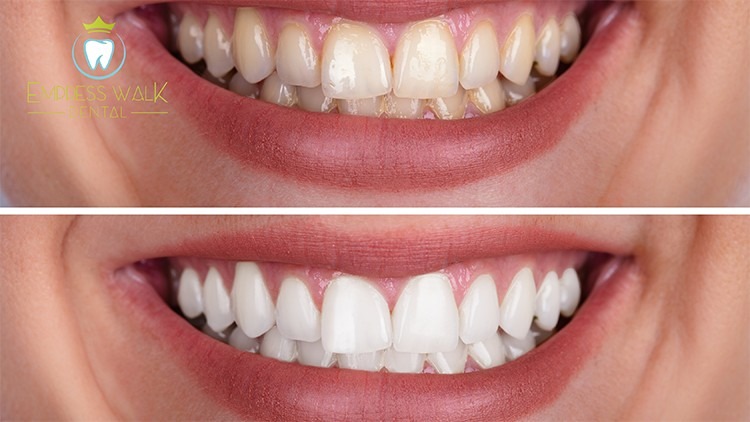
Teeth whitening is a cosmetic treatment, and the CDCP generally does not cover cosmetic treatments.
Veneers
Veneers are also considered cosmetic treatments. As a result, the CDCP lists both composite and ceramic veneers as exclusions.
CDCP vs the Ontario Seniors Dental Care Program (OSDCP)
Both are government dental programs, with one notable difference:
The CDCP is a federal program available to all eligible Canadians. On the other hand, the Ontario Seniors Dental Care Program (OSDCP) is a provincial program that only covers eligible Ontario residents aged 65 and over.
Some people may assume they can use both programs for the same treatment to reduce costs as much as possible, but currently, they cannot.
This table compares them:
| Factor | CDCP | OSDCP |
| Government level | Federal | Provincial (Ontario) |
| Age requirement | Canadian residents of all ages | 65+ |
| Income threshold | Adjusted family net income under $90,000 | $25,480 single / $42,290 couple |
| Private dental offices | Available through participating providers | OSDCP services are delivered through participating public-sector/community providers |
| Can you qualify for both? | Yes | Yes |
| Can benefits be coordinated? | No coordination with OSDCP | No coordination with CDCP |
OSDCP Eligibility
The OSDCP is mainly designed for lower-income Ontario seniors:
- Single senior: Annual net income of $25,480 or less.
- Couple: Combined annual net income of $42,290 or less.
Also, as mentioned earlier, this program applies only to Ontario residents aged 65 and over who do not have access to other dental benefits.
Where Can You Receive OSDCP Care?
Unlike CDCP benefits, which you can access at any dental clinic that participates in the CDCP, OSDCP services are only available through Public Health Units, participating Community Health Centers, and Aboriginal Health Access Centers.
Given that, CDCP for seniors is the better option for those who want to receive dental care from a private provider.

How to Apply for the CDCP
The CDCP benefit year runs from July 1, 2026, to June 30, 2027, and applications for the 2026-2027 CDCP benefit year are open now.
Follow these steps to apply:
- Ensure you are eligible: You must meet the CDCP requirements for income, tax filing, Canadian residency, and access to dental insurance.
- Sign in to My Service Canada Account (MSCA): Sign in to your MSCA or create one if you do not already have an account.
- Submit your request through MSCA: On your MSCA dashboard, find the Canadian Dental Care Plan section. Select that and follow the application instructions.
- Access your CDCP information: Once you have applied, you can view your eligibility and other CDCP information in MSCA. You can also access your Sun Life benefit card and coverage information through this platform. You can use this information when accessing care from participating providers.
Remember that you must renew CDCP coverage annually. For example, if you had coverage during 2025-2026 but did not renew by the June 1, 2026 deadline, you cannot access CDCP benefits until you re-apply for the new benefit year. In that case, you will have a gap in coverage.
Read more: “How to Apply for CDCP: A Step-by-Step Guide”
Getting CDCP Care at a Participating Dentist in North York
To use your Canadian Dental Care Plan benefits, you must receive dental treatments from providers participating in the program so they can bill Sun Life at the CDCP-established fee. You can search the Sun Life website to find dental clinics that participate in the CDCP.
Empress Walk Dental accepts CDCP for seniors and other eligible patients under this government program. If you want to reduce out-of-pocket costs for dental treatments and CDCP covers you, contact us to schedule an appointment.
FAQ
Does CDCP cover dentures for seniors?
Yes. The CDCP covers eligible complete and partial removable dentures, subject to the plan’s eligibility criteria and frequency limits. Some types of dentures and denture services require pre-authorization.
Does CDCP cover root canals?
Yes. CDCP covers eligible root canal treatments, subject to the CDCP’s clinical criteria and applicable frequency limits. Some endodontic procedures, such as root canal re-treatment, require pre-authorization.
Does CDCP cover crowns?
Yes. Eligible crowns are covered in specific circumstances, but pre-authorization is required. Crown coverage is also subject to clinical criteria and frequency limits.
Does CDCP cover implants or bridges?
No. Dental implants and fixed bridges are excluded from CDCP coverage, including implant-related procedures and bridge-related services.
Is there an annual maximum for CDCP coverage?
No. The CDCP does not have a fixed annual dollar maximum. Instead, individual services are subject to specific frequency limits and clinical criteria. In some cases, pre-authorization is required.