


Teenagers have several reasons to choose clear aligners over traditional solutions like metal braces. These benefits range from a discreet appearance to removable trays that make eating and drinking easier.
In this blog, we go through 6 key reasons that explain why Invisalign for teens can be an excellent option if the patient is a suitable candidate for this treatment. We also cover the differences between this method and traditional braces.
Top 6 Benefits of Invisalign for Teens
Invisalign is popular among teenagers for many reasons. Let’s look at the key logic behind its popularity.
1. Virtually Invisible
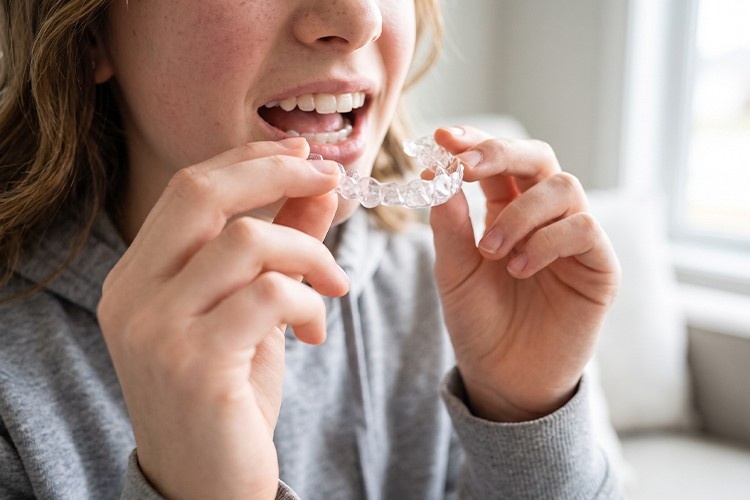
Traditional methods like metal braces include visible brackets and wires. Invisalign treatment uses clear aligners made from smooth plastic that is much less noticeable than traditional braces. Many teenagers prefer this discreet appearance as it helps them feel more comfortable in social situations, such as at school and during everyday activities like taking photos with friends.
2. Removable for Easy Eating and Cleaning
Clear aligners can be easily removed when eating or drinking. This allows teens to enjoy their favourite food without many of the food restrictions associated with traditional braces.
Additionally, since removing the aligners is possible, brushing and flossing become more straightforward, which possibly leads to better oral hygiene throughout treatment.
Read more: “Can You Drink Coffee with Invisalign Without Damaging Your Smile?”
3. No Impact on Sports or Music
Our orthodontic team uses clear aligners designed to fit each patient’s teeth. This makes aligners a convenient option for teens with active lifestyles. As explained earlier, they can be removed during certain activities, such as playing wind instruments. Also, their low-profile design helps reduce concerns for athletes who wear mouthguards.
4. Fewer Orthodontic Visits
Compared to traditional braces, Invisalign treatment requires fewer visits to the orthodontist. Metal braces need frequent adjustments, meaning patients need more regular appointments.
Invisalign relies on a series of clear aligners that teenagers receive at different stages of treatment and replace at home every 1 to 2 weeks, according to the orthodontist’s instructions. However, Invisalign for teens also requires follow-up visits to monitor progress and make any necessary adjustments.
Your Invisalign Options at Empress Walk Dental!
At Empress Walk Dental, our team provides comprehensive Invisalign consultations and personalized care to help you achieve a healthier, more confident smile.
5. Shorter Average Treatment Time
The exact treatment timeline varies based on the complexity of the patient’s orthodontic needs. In general, many teens straighten their teeth with clear aligners in about 12 to 18 months, which is often faster than getting results with traditional braces.
Note that wearing aligners as instructed is critical to help treatment stay on track and avoid unexpected delays.

6. Built for Growing Smiles
Invisalign includes features designed specifically for developing smiles. For example, special eruption tabs create space for incoming molars when needed.
Moreover, blue compliance indicators gradually fade with wear, helping patients and orthodontists monitor whether the patient adheres to treatment instructions and wears aligners as prescribed.
Invisalign for Teens vs. Traditional Braces: A Comparison
This table summarizes key differences between Invisalign for teens and traditional braces, two common orthodontic options for straightening teeth and correcting bite problems:
| Factor | Invisalign for Teens | Traditional Braces |
| Appearance | Nearly invisible | Visible |
| Food Restrictions | Removable, so teens can eat their favorite foods without worrying about damaging brackets or wires. | Requires avoiding certain hard or chewy foods that can damage brackets or wires. |
| Oral Hygiene | Aligners can be removed for brushing and flossing. | Cleaning around brackets and wires requires extra time and care. |
| Sports | Flexible for athletes and musicians. Follow your orthodontist’s guidance for mouthguards or playing instruments. | Brackets may require additional protection during contact sports, and some musicians may need time to adjust to playing instruments. |
| Orthodontic Visits | Often every 6 to 10 weeks | Typically, every 4 to 8 weeks |
| Treatment Time | Many teen cases are completed in about 12 to 18 months, but the timeline depends on case complexity and wearing aligners as directed. | Commonly takes about 18 to 24 months, though some cases may be shorter or longer. |
| Best For | Teens who want a discreet, removable option and can commit to wearing aligners for the recommended time each day. | Teens who have complex tooth movement requirements. |
Read more: “How Long Does It Take to Get Results with Invisalign vs. Traditional Braces?”
Is Invisalign the Right Choice for Your Child?
While many teens may prefer clear aligners over metal brackets and wires for orthodontic treatment, the orthodontist should determine whether this treatment is suitable for each teen’s case. Invisalign for teens works well for mild to moderate misalignments and bite issues. More complex cases may require traditional orthodontic methods.
Above all, the orthodontic team’s experience plays an important role in the success of treatment. So, it is recommended to undergo treatment by an experienced team to achieve effective treatment results. If you live in North York and want to straighten your child’s teeth, our team at Empress Walk Dental can help. Contact us today and schedule an appointment to find out whether your child is a suitable candidate for Invisalign.
FAQ
At what age can teens start Invisalign?
Most teens can start around age 12 or 13 once their permanent teeth have come in, but every case is different.
Do teens have to wear Invisalign all day?
Yes, aligners should be worn 20 to 22 hours per day for best results. They’re only removed for eating, drinking anything other than water, brushing, and flossing
What if teens lose their Invisalign aligners?
Invisalign Teen includes replacement aligners as part of the treatment plan. The compliance indicator also helps parents track wear time.
Is Invisalign for teens more expensive than braces?
Invisalign for teens is typically priced similarly to braces, which may vary based on case complexity. Most dental insurance plans in Canada offer comparable coverage
Has your child started or completed orthodontic treatment with Invisalign or traditional braces? Tell us about your experience in the comments below.